
| Search JoyZine with Google Site Search! |
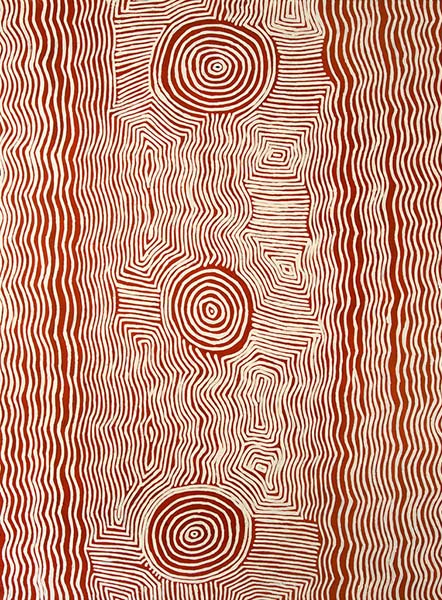
The Kuniya and Liru
Long ago in the Tjurpa the Kuniya, or non-venomous carpet snakes, journeyed from Paku-Paku, a waterhole near Mount Conner west of Uluru, until they came to a large flat sandhill in the centre of which was a waterhole. They made their camp there and for a time life was very good. Each day the Kuniya women were able to find plenty of food which they carried home to the camp in their curved wooden carrying dishes. They prepared their bread from seeds gathered from grasses on the plain and cooked it in the ashes of their fires. The Kuniya men, after hunting kangaroos, emus and wallabies, liked to lie resting at the edge of the sandhill as the sun set. This sandhill at the close of the Creation era turned to rock. The Kuniya people themselves were changed into various features of what is now called Uluru. The women seated in their camp became large boulders in Tjiki Gorge while their piti (wooden carrying dish) became a tall slab of rock at the head of the gorge. A rock hole represents their campfire, and small grasses and bushes which grow in tufts in the gorge are their hairs. The sleeping Kuniya men turned into boulders which now lie motionless in the sun on the plain beneath. While the Kuniya people were staying at Uluru, however, life did not remain peaceful. A party of venomous snake men, the Liru, were travelling around in the Pitjantjatjara country, causing a lot of trouble. The Liru camped at Kata-tjuta and then decided to approach Uluru to attack the Kuniya. They were led by the great warrior Kulikudgeri and, travelling in a large group, they crossed the sand hills and arrived at the camp of a powerful Kuniya woman named Pulari. Pulari had separated herself from the rest of her people as she had just given birth to a child. Enraged and desperate to protect her child, she sprang at the Liru with her child in her arms, spitting out the essence of disease and death, or arwita. Many of the Liru were killed, but they continued to attack. A young Kuniya warrior challenged Kulikudgeri to a fight to the death and the Liru man, after an arduous battle, fatally wounded the Kuniya man who crawled away over the sandhill. Kuniya Inkridi, the mother of the slain youth, then rose in a fury and struck Kulikudgeri a great blow on the nose with her digging stick. He died in agony, his blood streaming over the surface of the land, leaving stains on the rock that remain today. Kuniya Inkridi mourned for her lost son. She covered her body in red ochre and sang and wailed into the night. She spat out arwita, the essence of death and disease, and any man approaching that site today will be stricken. Meanwhile a huge battle took place between the Liru and the Kuniya at the waterhole on the top of the sandhill. The Liru speared a great many Kuniya and, victorious, left the area and went back to Kata-tjuta. Kuniya Inkridi, the great mother carpet snake, despaired; hearing of the death of her people, she sang the arwita song to kill herself and the remaining Kuniya. At the close of the Tjurpa period, when the giant sandhill turned to stone, these epic events were enshrined in stone also. The route of the Liru men from Kata-tjuta to Uluru is marked by rows of desert oaks, the metamorphosed bodies of the invaders, while the tracks of the Liru men were turned into deep fissures on the south-western face of Uluru. The spears the Liru men threw made indentations in the sand which are now potholes on the vertical cliff face. A large split boulder was once the body of the Kuniya woman Pulari who gave birth at this place; within the boulder is a small cave in which her child was born. Near the Pulari stone is a shallow cave with stones in front, which were once Pulari and her child. Until recently, pregnant women tried to give birth in this cave, believing that Pulari would help them have an easier delivery. When the young wounded Kuniya warrior crawled away, the track he left became a watercourse. He died at a place where today there are three waterholes, each of which contains the blood of the dying man transformed into water. His victor, the leader of the Liru, Kulikudgeri, became the large, square boulder while his nose, which was cut off by Kuniya Inkridi, stands out as a huge slab that has split off the main rock. The bodies of Kuniya Inkridi and her husband remain today as large and small boulders and rocks, the fig trees that tenaciously grip the smooth rock surface and send roots burrowing into the crevices are believed to be their hair. These boulders remain very important sites for the descendants of the Kuniya, as increase or fertility centres for carpet snakes. |